
Stonewall County Court Records After Arrest
A Stonewall County jail arrest starts with custody, but the court record starts with a filed case. The prosecutor may file a complaint, information, indictment, motion, or other charging paper after law enforcement books the person. The filed charge can match the booking charge, but it can also be reduced, amended, enhanced, dismissed, or rejected after review. That is why court records after a jail arrest should be checked through the clerk and court system, not only through jail custody channels.
The local court-record starting point is the Stonewall County District/County Clerk. The official page lists Holly McLaury, the office at 128 Town Square Lane, Drawer P, Aspermont, phone 940-989-2272, fax 940-988-4001, and public counter hours. It also links to the county's Online Records Search and the 39th Judicial District Court site. Custody and booking detail belong with Stonewall County jail inmate records, while booking-photo questions belong with Stonewall County jail mugshots.
The county clerk page is the county source that ties court-record contact details, hours, forms, and online records into one public office.

Find Court Records After Arrest
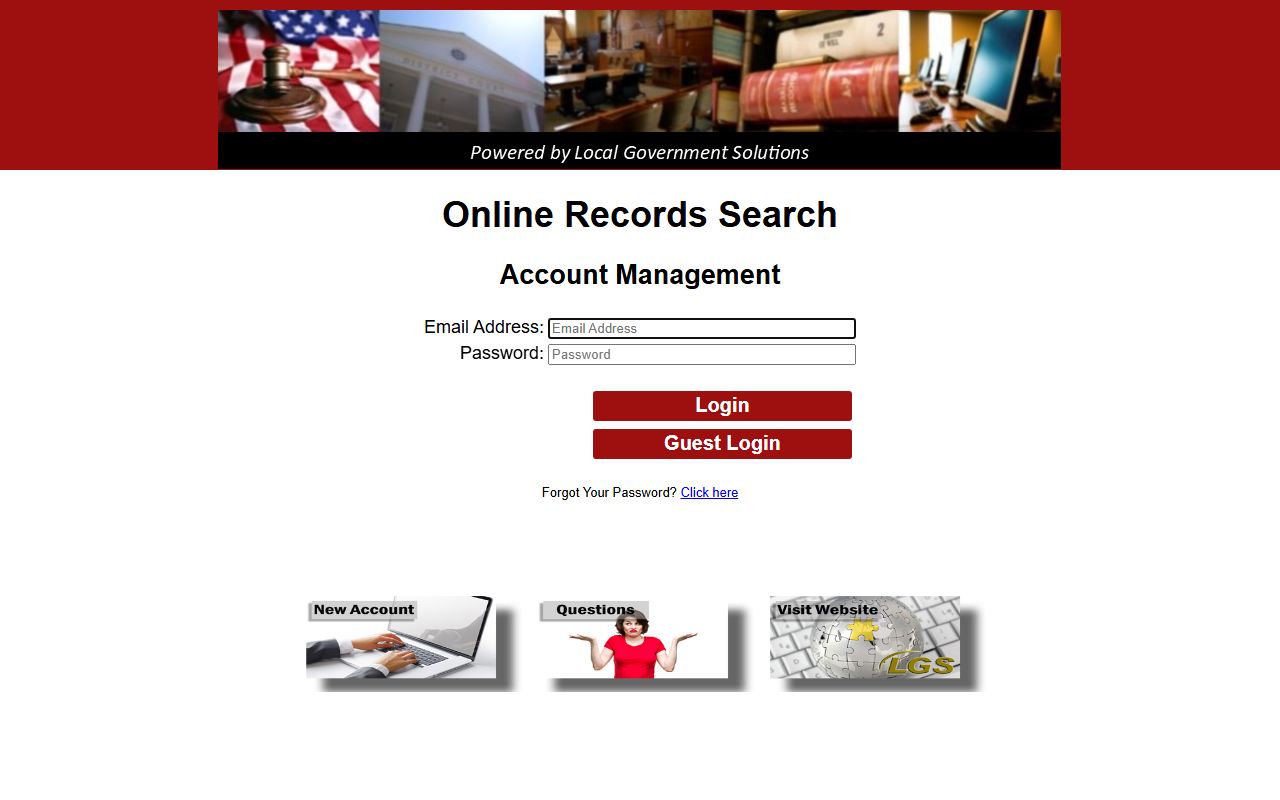
Stonewall County links to an Online Records Search at public.lgsonlinesolutions.com/ors.html. The public landing and login screens show account login and Guest Login access, but the inspected source did not expose the deeper case-search fields before entering the system. For that reason, a user should start with Guest Login if available, search by the fields offered by the vendor, and call the clerk if a new arrest does not appear yet. There may be a gap between booking and court-index availability.
- Confirm the jail side first if current custody or bond status is unclear.
- Open the county-linked Online Records Search and use Guest Login when the public screen provides it.
- Search using the fields the vendor makes available, such as name, cause number, filing date, or charge, if those fields appear inside the system.
- Call the District/County Clerk at 940-989-2272 when the case is too new, the name is uncertain, or the portal does not return a clear result.
- Use Texas DPS only for statewide criminal-history or conviction context, not for live Stonewall County jail status.
The Online Records Search login page shows the actual public login structure captured in the research.
Stonewall Court Search Fields
The county-linked court-search landing screen did not confirm public case filters such as defendant name, case number, date range, or charge. It did confirm account login fields and a Guest Login button. The table below reflects only what was captured, then adds a practical caution for court records after an arrest: do not claim a field exists until the vendor screen presents it.
| Field Label | Type | Required | Options or Notes |
|---|---|---|---|
| Email Address | Text | Yes for account login | The login page lowercases the value on blur. |
| Password | Password | Yes for account login | Standard password field for account users. |
| Login | Button | n/a | Submits account login. |
| Guest Login | Button | n/a | The captured script sets OPERCODE and PASSWD to guest values. |
| Case-search fields | Not visible from landing screen | Unknown | Use the fields provided after entry, or contact the clerk. |
Charges Filed After Arrest
Court records after a jail arrest depend on a charging document. A complaint is often a sworn starting document. An information is a prosecutor-filed charging paper used in many misdemeanor cases and some felony contexts when allowed. An indictment is a grand-jury charging document for felony prosecution. Stonewall County research identifies District Attorney Mike Fouts in the 39th Judicial District context and County Attorney Riley Branch for county-level contact context, but it does not publish a division-by-division charging workflow.
| Document | Who Uses It | What It Means | Stonewall Search Note |
|---|---|---|---|
| Complaint | Officer or prosecutor | Sworn allegation used to start or support a criminal case. | May appear early after arrest. |
| Information | Prosecutor | Formal prosecutor-filed charge for many eligible cases. | Check with the clerk if not visible online. |
| Indictment | Grand jury | Felony charging document issued through grand-jury action. | Often tied to district-level felony prosecution. |
Note: A booking charge is an arrest allegation; a court charge is the charge filed and tracked by the court.
Stonewall Charge Status Records
Charge status can change after a Stonewall County arrest. The prosecutor may accept a case as filed, add a count, reduce a count, amend the wording, dismiss a charge, or wait on grand-jury action. A clerk record may also show court settings, warrants, bond events, plea entries, judgment, sentence, probation or community supervision, and dismissal entries. The court record is the right source for those case events.
| Status | What It Means | Why It Matters |
|---|---|---|
| Pending | The charge has not reached final disposition. | Settings, bond, or motions may still change. |
| Filed | The prosecutor or court has opened the formal charge. | The case should be tracked through the clerk. |
| Amended or reduced | The charge changed from the first version. | Do not rely on the old booking allegation alone. |
| Dismissed | The charge was ended by court or prosecutor action. | Dismissal is not the same as expunction. |
| Convicted | A guilty plea, verdict, or judgment was entered. | Statewide conviction records may also become relevant. |
Bond After Stonewall Arrest
Texas Code of Criminal Procedure Chapter 17 governs bail and personal bonds, while Article 15.17 governs the warning and early magistrate process after arrest. Stonewall County does not publish a local bond page in the sources inspected. For release mechanics, call the sheriff first. For filed case status, call the District/County Clerk. A hold from another court, parole authority, federal agency, ICE, or another county can keep a person in custody even when one Stonewall charge has a bond amount.
| Bond Type | How It Works | Stonewall Routing |
|---|---|---|
| Cash bond | Full amount is paid directly, subject to court rules and fees. | Confirm accepted method with sheriff or court before travel. |
| Surety bond | A licensed bail bond company guarantees appearance. | Confirm paperwork and jail receipt before expecting release. |
| Personal or PR bond | Release on promise and court conditions. | Set by magistrate or court, not by a website. |
| No-bond hold | Routine bond is not available for that hold. | Ask which agency or court controls release. |
Warrants and Court Records
No official Stonewall County active warrant search, sheriff warrant list, most-wanted page, or app-based warrant lookup was located. A warrant question after arrest should be routed to the sheriff for custody and to the issuing court or clerk for case status. An arrest warrant may create a booking record. A bench warrant may keep a person in custody until the court resolves the appearance issue or sets a release path. A capias, fugitive warrant, parole warrant, federal hold, or ICE detainer can change the release analysis.
People with possible active warrants should not rely on a website result to decide whether to appear, travel, or ignore a court date. The safer record path is official contact with the court, the clerk, the sheriff, or counsel. Stonewall County's public research does not support a single warrant database for all agencies.
Charges Versus Convictions
A Stonewall County court record after a jail arrest may show a charge long before it shows a conviction. A charge is an accusation. A conviction is the result of a guilty plea, verdict, or judgment. Texas DPS conviction searches can help with statewide conviction context, but they are not a substitute for the clerk's case file when a new arrest is still pending.
| Point | Charge | Conviction |
|---|---|---|
| Stage | Accusation filed or alleged. | Final guilt finding or plea outcome. |
| Source | Booking record, complaint, information, or indictment. | Judgment, plea record, sentence, or statewide conviction record. |
| Can change? | Yes. It can be amended, reduced, or dismissed. | Yes, but usually through appeal, court order, or later record-clearing relief. |
| Use caution | Does not prove guilt. | Still confirm identity and disposition before relying on it. |
Sealed and Expunged Records
Texas Code of Criminal Procedure Chapter 55 governs expunction for qualifying arrest records. Expunction is different from sealing or nondisclosure. An expunction can remove or destroy qualifying records under a court order. A sealed or nondisclosed record generally restricts public access but may remain available to certain agencies or for specific legal uses. Stonewall County sources did not publish a local expunction packet, so eligibility should be checked through counsel, the clerk, or the statute.
| Point | Sealed or Nondisclosed | Expunged |
|---|---|---|
| Public visibility | Restricted from ordinary public view. | Treated as removed under the court order. |
| Record status | May still exist for limited uses. | Destroyed or removed as directed by law and order. |
| Common trigger | Eligible disposition and court order. | Qualifying arrest, dismissal, acquittal, pardon, or other Chapter 55 route. |
| Stonewall action | Ask the clerk how the order is filed and reflected. | Use a court order, not a web request alone. |
Stonewall Prosecutor Records
The county-hosted District Attorney page lists District Attorney Mike Fouts, P.O. Box P, Aspermont, phone 940-864-2072, and fax 940-864-3364. The County Attorney page lists Riley Branch, P.O. Box 367, Aspermont, phone 940-989-2608, and fax 940-988-4310. These offices are relevant because prosecutors decide what formal charge to file after an arrest. The research does not publish a detailed local division chart, so court-record search text should distinguish felony and county-level context without overclaiming which office handles each specific case.
District/County Clerk
Holly McLaury
128 Town Square Lane, Drawer P
Aspermont, TX 79502
940-989-2272
Monday-Thursday 8:00am-4:30pm; Friday 8:00am-12:00pm; closed for lunch 12:00pm-1:00pm.
District Attorney
Mike Fouts
P.O. Box P
Aspermont, TX 79502
940-864-2072
Restricted Arrest Court Records
Texas public-record law begins with access, but access is not unlimited. Texas Government Code Chapter 552 has exceptions and confidentiality rules. Juvenile matters, sealed files, expunction orders, medical or safety information, protected victim details, and ongoing-investigation material may be restricted or redacted. A clerk result may also lag behind the jail event, especially soon after an arrest.
Important: Court records after arrest are public-record references, not consumer reports, and must not be used for FCRA-regulated decisions.